| ||||
|
Monday, October 05, 2020 by: Michael Alexander
(Natural News) Researchers from the University of Houston (UH) have unveiled a new air filter that could help fight the coronavirus pandemic.
As detailed in an article published in the journal Materials Today Physics, the “catch and kill” device successfully killed 99.8 percent of aerosolized SARS-CoV-2 — the Wuhan coronavirus responsible for COVID-19 — in a single pass through its filter.
The device, which was designed by Zhifeng Ren, the director of the Texas Center for Superconductivity at UH and Monzer Hourani, CEO of the Houston-based medical real estate development firm Medistar, also killed 99.9 percent of Bacillus anthracis, the bacterium that causes the deadly anthrax disease.
According to the researchers involved in its creation, the device can be used in airplanes, offices, schools and cruise ships to help stop the spread of the coronavirus that is still ravaging many countries around the world. (Related: Scientists: Face masks reduce risk of coronavirus infections by 65 percent.)
“Its ability to help control the spread of the virus could be very useful for society,” Ren said.
As mentioned in the study, the researchers designed the device based on several findings regarding the virus, specifically, that it can remain in the air for about three hours but cannot survive temperatures above 70 C, or about 158 F.
Taking these factors into consideration, the researchers designed a device that could not only filter the virus quickly from the air, but also blast it with heat.
To achieve this, Ren suggested using commercially available nickel foam, noting that aside from being porous — which means it allows the flow of air while filtering potentially harmful particles — the material is also an electrical conductor. This means its temperature can be raised without the need for an additional heat source.
The researchers also noted that the device’s prototype, which was built by a local workshop and tested at the UH and the University of Texas Medical Branch at Galveston laboratories, satisfies the requirements for conventional heating, ventilation and air conditioning (HVAC) systems.
According to Faisal Cheema, one of the study authors, this newly developed technology offers the first-in-line prevention against airborne SARS-CoV-2 transmission. Cheema also believes it will be on the forefront of technologies available to combat the current pandemic and any future airborne biothreats in indoor environments.
Medistar’s Garrett Peel, who helped design the device, agrees, noting that the filter — which he describes as a high-performance COVID-19 killer — could be deployed to “high-priority venues” where essential workers are at high risk of exposure.
“This is safe and effective. We want to roll this out in Texas first and start deploying them in schools, nursing homes. This unit could be deployed in 60 days,” Peel said, adding that the government must create public and private partnerships in order to roll out the product into schools.
“It provides an extra sense of security, knowing that our children and elderly are protected,” Peel added.
Plans are now underway to develop a desktop-sized version of the device that can purify the air in an office worker’s immediate surroundings.
As per the researchers, the filter could be in production as soon as August.
Wednesday, September 30, 2020 by: Evangelyn Rodriguez

(Natural News) Ultraviolet (UV) light is known as a health hazard to the skin and eyes, but a new study reports that a certain type of “germicidal” UV light can eliminate airborne coronaviruses without harming exposed human tissues.
According to researchers at Columbia University Irving Medical Center‘s Center for Radiological Research, far-UVC light, which has a lower wavelength than DNA-damaging UVA and UVB from the sun, can inactivate 99.9 percent of airborne viral pathogens in the span of 25 minutes at considerably low doses. This makes it a safe and effective disinfectant to use in public areas, where people are likely to catch infectious diseases like COVID-19, which is caused by the Wuhan coronavirus.
The full article was published in the journal Scientific Reports.
Prolonged exposure to UV radiation is a major risk factor for skin cancer. This natural energy is emitted by the sun, but because UV light has a shorter wavelength than visible light, it is invisible to the eyes. Despite this, the damaging effects of UV rays can easily be felt and seen, especially on the skin.
Two types of UV rays are responsible for the skin damage associated with excessive sun exposure. UVA, which has a longer wavelength (320 nm to 400 nm) than UVB, is the type that causes premature skin aging. UVB, whose wavelength ranges from 280 nm to 315 nm, is the type that causes sunburn.
Although UVB doesn’t penetrate as deeply as UVA, it can still damage the DNA of cells that make up the outermost layer of the skin. UVA, in contrast, is responsible for the genetic damage that occurs in the innermost layer of the skin, where skin cancers usually develop. UVA also accounts for up to 95 percent of the radiation that reaches the Earth from the Sun.
Another type of UV ray exists, although it is relatively less discussed. UVC, which happens to be the most damaging type of radiation due to being high-energy, only has a wavelength range of 200 nm to 280 nm. But since it is easily filtered by the atmosphere, UVC doesn’t reach the Earth’s surface, unlike UVA and UVB.
The human body has ample natural protection from UVC, so long as exposure is limited and not consistent. The layer of dead skin that covers most of the human body can absorb UVC completely and prevent it from harming live tissue. However, because UVC is readily absorbed by most organic matter, certain areas with reduced dead skin thickness may sustain extensive DNA damage upon exposure. This can easily lead to severe erythema and squamous cell cancer.
On the other hand, UVC’s high absorbability offers a unique advantage. The strong absorption shown by organic molecules like DNA makes UVC a powerful germicide that can destroy not only the genetic material of viruses, but also the reproductive processes of microbial pathogens, such as bacteria and fungi.
In a 2017 study published in Radiation Research, Columbia University researchers discovered that a type of radiation in the UVC band can effectively kill the superbug methicillin-resistant Staphylococcus aureus (MRSA) without causing skin damage in mice. This UV light has a wavelength of 222 nm — far shorter than that of conventional germicidal lamps (254 nm) — and was referred to as far-UVC.
The following year, the same research team led by Dr. David Brenner, a professor of radiation biophysics at Columbia University, found that far-UVC can efficiently inactivate aerosolized viruses. At a low dose of 2?mJ/cm2, the 222-nm UV light altered the surface chemistry of the H1N1 influenza virus, which hampered its ability to infect target cells. The H1N1 virus was responsible for the 2009 influenza pandemic that killed more than half a million people worldwide.
In their new study, Brenner and his team tested far-UVC light against two strains of airborne human coronviruses, namely, alpha HCoV-229E and beta HCoV-OC43. They believe that inactivating viruses within a short time of their production is an effective strategy to limit airborne viral transmissions.
Their experiments revealed that at substantially low doses of 1.7 and 1.2 mJ/cm2, far-UVC inactivated 99.9 percent of aerosolized coronavirus 229E and OC43, respectively. Considering the current regulatory UVC exposure limit is 3 mJ/cm2/hour, the researchers estimate that continuous far-UVC exposure at this rate in occupied public areas will result in about 95 percent viral inactivation in the span of 11 minutes, and 99.9 percent inactivation in 25 minutes.
Although they were not able to test far-UVC against SARS-CoV-2, the coronavirus responsible for the current pandemic, Brenner and his team are confident that far-UVC will be just as effective. After all, human coronaviruses have similar genomic sizes, and far-UVC has a strong absorbance in biological materials, especially those of micrometer or smaller dimensions like bacteria and viruses.
“While staying within current regulatory dose limits, low-dose-rate far-UVC exposure can potentially safely provide a major reduction in the ambient level of airborne coronaviruses in occupied public locations,” the researchers wrote in their report.
When asked how best to use far-UVC, Brenner suggests installing overhead far-UVC lights in public places. This will allow the harmless radiation to continuously kill microbes, including (potentially) the Wuhan coronavirus. (Related: A town in Germany prevented 40% of coronavirus infections by masking up.)
“We don’t see far-UVC light as an alternative to masks and social distancing,” said Brenner. “We see it as a new extra weapon that we can use in the battle against COVID-19.”
(Natural News) Black Lives Matter (BLM) rioters are quick to hijack the death of Black people reported in the news, like Jacob Blake and Breonna Taylor. But who exactly is Breonna Taylor and why are BLM rioters claiming that she was unjustly murdered in her own home?
Charlie Kirk – the host of “The Charlie Kirk Show” and the founder and president of Turning Point USA – the largest and fastest-growing conservative youth activist organization in America, spoke up about the truth behind the death of Breonna Taylor.
In Kirk’s video, he decried the “anarchists, BLM-incorporated democrats” marching in the streets and trying to advocate for justice for Breonna Taylor without reading up on the facts.
Even Senator Harris, who Kirk claims “will never be Vice President of the United States,” says Taylor’s family deserves justice.
Here are the facts of the case.
When Louisville police officers went to Taylor’s residence, they knocked even though it was supposed to be a no-knock raid. The officers then entered her home because there was no answer after they made their presence known.
Taylor’s new boyfriend then started shooting at the police officers, proving that Kenneth Walker is a criminal and a thug. (Related: One officer in Breonna Taylor case charged with wanton endangerment, Kentucky AG finds police use of force was JUSTIFIED.)
Walker fired a 9mm pistol at the officers who were simply doing their jobs and executing a search warrant. Walker shot Sergeant Jonathan Mattingly in the leg. Mattingly and Detective Myles Cosgrove then returned fire.
The police and Walker then continued to shoot at each other. Sometime during the shootout, Taylor passed away after being hit six times by police bullets.
A Jefferson County grand jury charged Brett Hankinson, now a former Louisville Metro Police Department detective, with three counts of “wanton endangerment.” Hankinson fired a total of 10 rounds, with some entering an adjacent apartment housing a male, a pregnant female and a child.
Hankinson has already been fired from the force, and he is currently facing five years on each of the three charged counts. It was also determined that the other two officers were justified in firing their weapons.
While Taylor’s death isn’t an outcome anyone would defend, it’s worth noting that the police didn’t walk into a random apartment. The police also didn’t stroll up to a random person on the street execution-style and decided to kill this individual.
Taylor was standing in the hallway, next to Walker, who was in a shooting stance and was unharmed during the shootout. She was also dating Walker, a criminal, who decided to shoot at the police.
And so the grand jury in Jefferson County, Kentucky, poured over this information. This outraged people and some say it’s unfair that the police are only tried for reckless endangerment, which is probably a correct indictment for one of the officers for endangering some of the other residents in the adjacent apartments.
But if there was evidence for the grand jury to proceed with a murder indictment, wouldn’t they have done that? Unfortunately, this grand jury was under such public pressure to go and proceed with that kind of indictment for murder.
Yet they didn’t push through because the facts didn’t warrant it.
Think again before you write Breonna Taylor’s name on your helmet or you have a shirt that says “Breonna Taylor.” Know the facts of the case: That she was involved in a drug-trafficking criminal scheme, that she was dating Walker, a thug who tried to kill a police officer and her ex-boyfriend Glover, wasn’t exactly an upstanding member of society.
Despite these facts, there are those who insist that Taylor must be remembered like Jacob Blake, who was accused of being a rapist. Before you start to create these “nationwide emotives and quasi-pathological campaigns” about “unjust police killings,” remember that Taylor would still be alive if her boyfriend Walker didn’t try to kill a police officer.
Kirk clarified that he wasn’t defending the fact that Taylor passed away in the crossfire. Rather, he called out the idea that police officers went out of their way to murder a defenseless Taylor in her bed when she was actually standing in the hallway.
The officers also knocked courteously even though they had a no-knock warrant. Know the facts, don’t get angry because mainstream media tells you, and stand with police officers who acted correctly during the incident, advised Kirk.
If people are going to burn down another city because of Taylor’s death, Kirk warned that he and others like him, who respect the police, will not tolerate it.
Hold the line with truth because rioters want to burn down America at all costs, concluded Kirk.
Visit Rioting.news to learn more about these so-called unjust killings and the riots still going on in the country.
Who is Breonna Taylor? - involved in a drug-trafficking criminal scheme, death caused by her boyfriend shooting at POLICE. - WHY ARE A LOT AMERICANS SO DUMB 'AND STUPID' TO BELIEVE THE NEWS MEDIA SPEWING OUT FAKE NEWS ALWAYS
Race for Sabah CM candidate as GRS risks coup with every passing moment
The Sabah election may have concluded but the race to form the state government has only just begun.
Gabungan Rakyat Sabah (GRS) - comprising Perikatan Nasional (PN), BN, and PBS - won the snap election last night after securing 38 out of the 73 contested constituencies, which is a slim two-seat majority.
Conventionally, the chief ministerial candidate would quickly be sworn in and then convene a special state legislative assembly sitting to appoint up to six nominated state assemblypersons, who can bolster the new government's majority.
A system unique to Sabah, the nominated representatives enjoy the same rights as an elected state assemblyperson. Their vote also counts in keeping or changing the chief minister.
This was what former chief minister Musa Aman tried to do after the May 9, 2018 general election.
At the time, Musa's BN was in a stalemate with the Warisan Plus alliance as both coalitions won 29 seats respectively. A total of 60 seats were contested in that election.
The other two seats were won by Star, which Musa quickly cut a deal with the Sabah-based party for their support. He was then sworn in as chief minister on May 10, a day after the election.
However, before Musa could convene a special state assembly sitting to appoint nominated assemblypersons who will be friendly to his government, Warisan president Shafie Apdal engineered a series of defections that cost Musa his majority.
Shafie was then sworn in as the chief minister on May 12, two days after Musa was sworn in.
Four days after that, Shafie appointed two nominated assemblypersons and another two in the following month.
Fast forward to today, GRS, which has a two-seat majority, would also want to move with haste as Shafie could pull off another series of defections as he did in 2018.
Complicated coalition of coalitions
However, unlike in 2018 where Musa was the undisputed chief ministerial candidate for BN, the GRS is a more complicated coalition of coalitions.
Of the 38 seats GRS won, PN has 17 seats, BN took 14 seats, while PBS secured seven.
PN, which won the most seats within GRS, sees itself as the natural coalition to have a say on who should become chief minister.
Prime Minister Muhyiddin Yassin previously proposed the newly-minted Sulaman assemblyperson Mohd Hajiji Noor (below, second from right) as PN's chief ministerial candidate.
However, PN's 17 seats are contributed by two parties - Bersatu with 11 seats and Star with six.
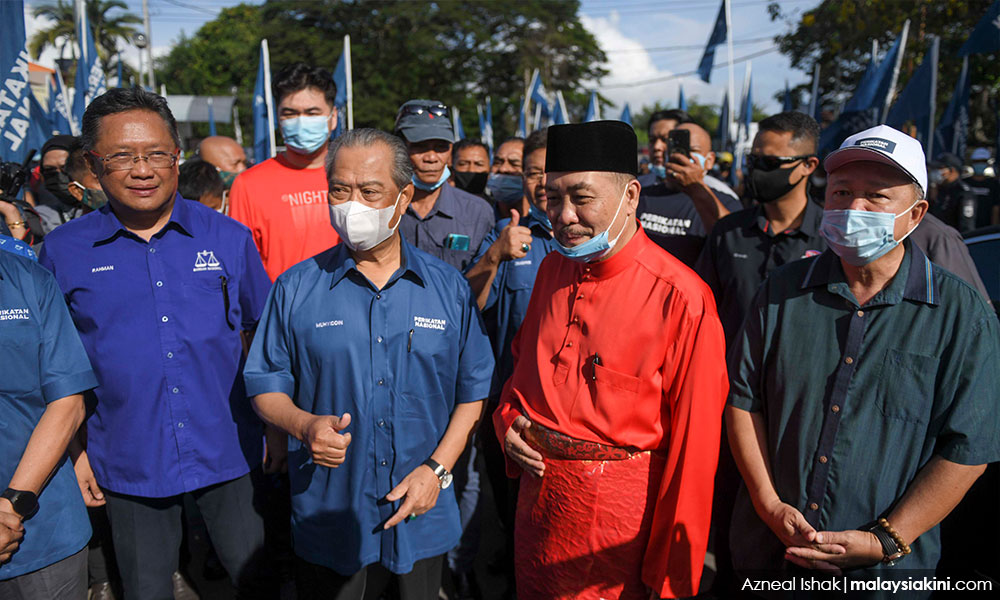
In contrast, Umno is arguing that even though BN won fewer seats than PN as a coalition, Umno as a party won the most seats in GRS.
All of BN's 14 seats were contributed by Umno. BN allies, PBRS and MCA, failed to win anything.
As individual parties, Bersatu comes in second with 11 seats while PBS is third with seven seats and Star is fourth with six seats.
"The chief minister from GRS must be chosen from Umno," Umno president Ahmad Zahid Hamidi told Malaysiakini.
However, the legal procedure has little regard for the intricacies of coalition politics.
Instead, all that matters is who has the support of at least 37 out of the 73 newly elected assemblypersons – the bare minimum for a simple majority.
This means no single party in GRS can get their own candidate sworn in as chief minister behind their allies' backs as every single party is needed to meet that threshold.
That is unless one of them cuts a deal with the current opposition.
Delay allows time to cut deals
For the Warisan Plus alliance, its undisputed chief ministerial candidate is Shafie Apdal.
However, the coalition comprising Warisan, Pakatan Harapan (DAP, PKR, Amanah) and Upko only won a total of 32 seats, which is five seats shy of a simple majority.
Warisan won 23 seats, DAP took six, PKR secured two, while Upko bagged one.
If any party on the winning side defects to the Warisan Plus alliance, it could cause the GRS to fall as a government even before it is properly formed.
Shafie (below), speaking to reporters after the election, indicated that he was not going away without a fight.
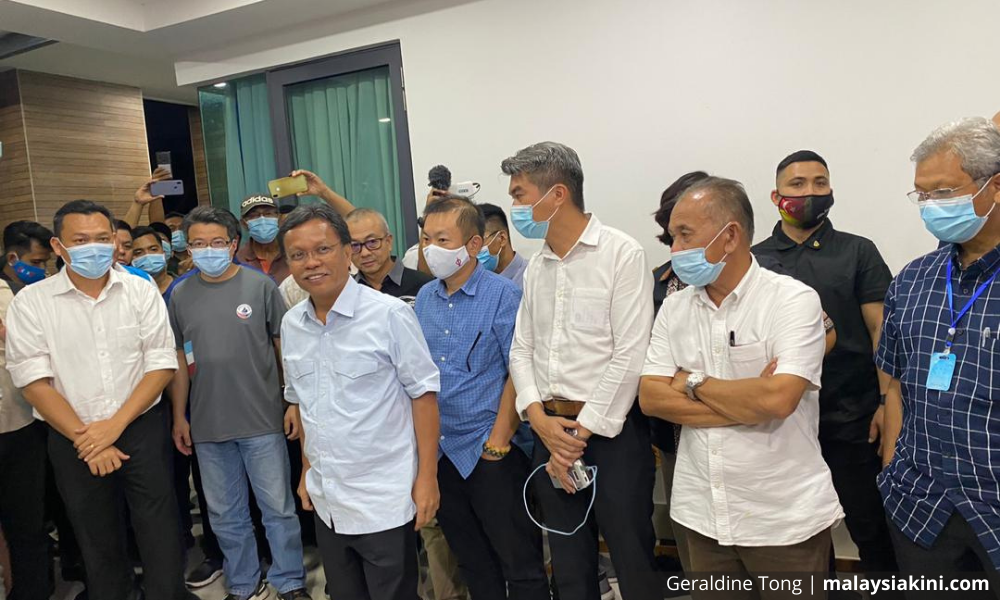
With 23 seats, Shafie argued that Warisan was the party that won the most seats in the Sabah election although it fell short as a coalition.
Furthermore, he pointed out that since DAP contested under the Warisan banner, this meant the "sailing ship logo" secured a total of 29 seats.
Not showing any hint of conceding defeat, Shafie was pressed if he will try to form the government even though his alliance fell short. His reply was cryptic.
"We will observe how the situation progresses and also the process in terms of the political scene. The fact is Warisan is the biggest party," he said.
Tougher scenario for Warisan Plus
However, unlike in 2018, the situation today is less favourable for Shafie.
For one, Warisan Plus is considered an opposition alliance at the federal level as Putrajaya is controlled by PN. All the GRS parties that won seats in the Sabah election are part of the federal government.
In contrast, the Warisan Plus alliance was part of the Pakatan Harapan-led federal government in 2018.
Furthermore, Shafie's five-seat deficit in this election is larger than the two-seat deficit he faced in 2018.
The obvious option is to recruit assemblypersons from GRS into the Warisan Plus alliance but there can also be many other options, including the possibility of Warisan ditching its existing allies to form the government with certain GRS parties.
The longer GRS ponders on who their chief ministerial candidate will be, the more time they are giving Shafie to cut deals with their representatives.
Three independents
Meanwhile, Hajiji (below) who is also the Sabah Bersatu chief, at a separate press conference in Kota Kinabalu last night, expressed confidence that GRS can settle on a chief ministerial candidate this morning.
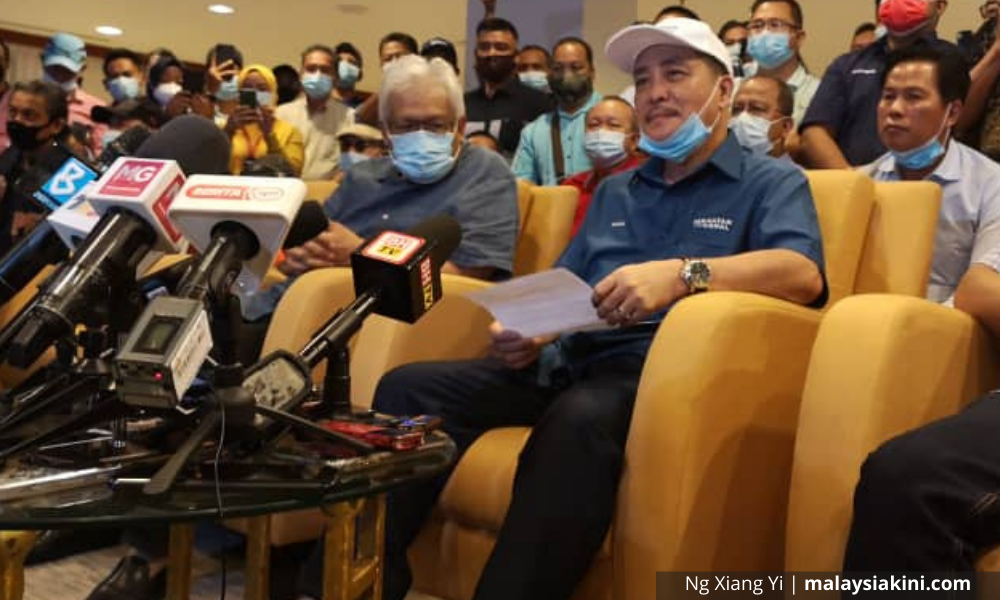
"We will announce tomorrow (today). It's a guessing game but we will announce tomorrow (today)," he said.
Hajiji was already rallying assemblypersons to bolster his side as he was spotted meeting newly-elected Kemabong assemblyperson Rubin Balang, who won as an independent.
Two other independent candidates also won in the election - Ruddy Awah in Pitas and Masiung Banah in Kuamut. Masiung is known to be friendly to GRS.
Considering Sabah's recent history in 2018 and its not-so-recent history when the PBS government was also brought down through defections shortly after the 1994 election, nothing is certain until the new government is sworn in.
The snap election yesterday too, was also due to Musa who tried to make a comeback as chief minister in July by engineering defections but was thwarted by Shafie who secured the dissolution of the state assembly. Musa did not contest in this election.
Lesson for Shafie Apdal - now ex CM, for not supporting Anwar for PM instead supporting Mahathir, so PH lost the govt. A PH federal govt would have prevented Musa from escaping the 46 charges against him and would be favourable for the state govt as well.
 By Johnathan Jones, The Western Journal
Hall of Famer Charles Barkley is being harshly condemned online after he broke with the unofficial NBA narrative Thursday regarding the police shooting death of Breonna Taylor in Louisville, Kentucky.
Speaking on TNT before the Western Conference Finals matchup between the Los Angeles Lakers and Denver Nuggets, the 11-time NBA All-Star commented on the decision of a Kentucky grand jury Wednesday not to recommend murder charges against any of the responding officers.
Three officers were attempting to serve a warrant at the residence of Taylor on March 13 when her boyfriend, Kenneth Walker, shot and wounded an officer, which led police to respond by opening fire, NBC News reported.
Taylor, 26, was killed in the chaotic exchange of gunfire.
Former Louisville Metropolitan Police Officer Brett Hankison was charged with three counts of wanton endangerment for allegedly firing his service weapon carelessly during the incident, but none of the officers was directly charged in Taylor's death.
“It's bad the young lady lost her life, but we do have to take into account that her boyfriend did shoot at the cops and shot a cop,” Barkley said.
“So, like I say, even though I'm really sorry she lost her life, I don't think this is something we can put in the same situation as George Floyd or Ahmaud Arbery,” he said
The "Inside the NBA" co-host also mocked the idea of defunding police agencies being pushed by many on the left.
“I hear these fools on TV talking about ‘defund the police’ and things like that,” he said.
While agreeing with the ideas of police and prison reform, Barkley said, "You know who ain't going to defund the cops? White neighborhoods and rich neighborhoods.
"So that notion they keep saying, I'm like, 'Wait a minute ... who are black people supposed to call, Ghostbusters, when we have crime in our neighborhoods?"
"We need to stop the defund or abolish the cops crap," he said.
Co-host Shaquille O'Neal, who is an auxiliary deputy for the Broward County Sheriff's Office in Florida, shared Barkley's views.
“I have to agree with Charles, [Taylor’s case] is sort of lumped in [with other cases where black Americans have died],” he said, according to USA Today.
"You have to get a warrant signed and some states do allow no-knock warrants. And everyone was asking for murder charges. When you talk about murder, you have to show intent. A homicide occurred and we're sorry a homicide occurred," O'Neal said.
Regarding Taylor's shooting, he said, "When you have a warrant signed by the judge, you are doing your job, and I would imagine that you would fire back."
Barkley and O'Neal quickly became targets of criticism onlinel
So we have the truth of the whole story.
| ||||
|
Nigeria: Christian lawyer in hiding after receiving death threats for defending victims of Fulani attacks Nigeria: Christian lawyer in hid...