Tuesday, November 7, 2017

New Virus With NO CURE Spreading: This Is WORSE Than The ‘Black Death’

New Virus With NO CURE Spreading: This Is WORSE Than The ‘Black Death’

 
marburgvirus
A new virus for which medical officials have no remedy is spreading. The infectious disease also has a fatality rate of almost 90% making it much more deadly than the black death plaguing Madagascar.
deadly outbreak of a rare and highly fatal virus has broken out in eastern Uganda and five cases have already been identified, the World Health Organization (WHO) has confirmed. The disease is known as the Marburg virus. It is similar to the Ebola virusand can be fatal in up to 88% of cases.
The outbreak of the contagious and deadly Marburg virus disease in the Kween district of eastern Uganda was declared by the nation’s Ministry of Health back on October 19. Since then, five cases have been identified as international aid agencies, stretched thin by Madagascar’s black death outbreak, have rushed to deploy teams on the ground to control the recent outbreak. This news comes amid a surge in cases of plague in Madagascar, which is considered to be the “worst outbreak in 50 years” and now at “crisis” point.
Marburg virus disease (MVD), which causes severe viral hemorrhagic fever, ranks among the most virulent pathogens known to infect humans, according to the World Health Organization. The WHO website reads: “Marburg virus disease is a rare disease with a high mortality rate for which there is no specific treatment. The virus is transmitted by direct contact with the blood, body fluids, and tissues of infected persons or wild animals (e.g. monkeys and fruit bats).” MVD also falls within the same family as the Ebola virus – the hemorrhagic fever that decimated West Africa and killed around 11,000 in 2014 and 2015.
The outbreak is thought to have begun in September when a man in his 30s, who worked as a game hunter and lived near a cave with a heavy presence of bats, was admitted to a local health center with a high fever, vomiting, and diarrhea. The man’s condition deteriorated quickly and he failed to respond to antimalarial treatments. He died after being taken to another hospital, and a short time later, his sister in her 50’s also died of the same ailment.
Emergency screening has begun at the Kenya-Uganda border in Turkana after all three members of the same family died of the disease in Uganda. Health workers have been asked to work with communities to stop the deadly Marburg outbreak from devastating communities in the rural region.
Dr. Zabulon Yoti, a Technical Coordinator for Emergencies at the World Health Organization (WHO) Regional Office for Africa, said: “Community engagement is the cornerstone of emergency response.” He urged health officials to “work with the communities to build their capacity for success and sustainability” and develop a better understanding of the local customs and traditions.
Early symptoms include fever, chills, headache, and myalgia (muscle pain). Several hundred people have been exposed to the virus as officials worry this outbreak could spread rapidly into regions already devastated by the ongoing black death outbreak.

Sunday, November 5, 2017

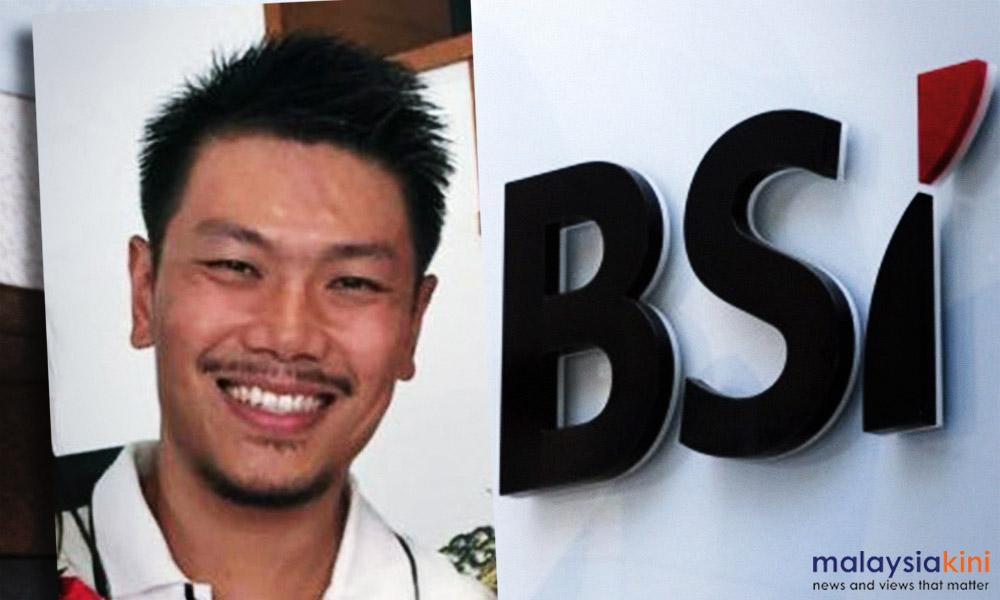
'Jho Low's award-winning superyacht bought with 1MDB funds'

'Jho Low's award-winning superyacht bought with 1MDB funds'

Published:      Modified: 
 
Tycoon Jho Low’s superyacht “The Equanimity” had been reported to be the scene of lavish parties featuring Hollywood celebrities.
Now, court filings by the United States Department of Justice (DOJ) alleged that the ship had been built and maintained using over US$250 million misappropriated from 1MDB.
In a civil forfeiture suit filed yesterday, the DOJ alleged the money was transferred to a Caledonian Bank account in the Cayman Islands held under the name “World View Ltd” in four major tranches.
“Upon information and belief, the funds transferred into the World View Account were used to acquire The Equanimity and were transmitted in a manner intended to conceal the origin, source, and ownership of criminal proceeds […]
“Funds were moved through multiple accounts owned by different entities on or about the same day in an unnecessarily complex manner with no apparent business purpose.
“For instance, there is no apparent commercial reason that Low would layer his transaction by funneling the exact same amount of money through multiple bank accounts at the same financial institution on or about the same day,” said the DOJ.
The department said Low had claimed in an email to his London lawyer and a senior BSI banker that World View Ltd is a family trust for his family.
The DOJ is seeking the civil forfeiture of the yacht together with other assets.
This is in addition to the US$100 million in London properties it sought last week, and the over US$1 billion in various assets it sought in July last year.
In a press release, the DOJ said the total assets subject to forfeiture in relation to alleged misappropriation of 1MDB funds adds up to almost US$1.7 billion.
This represents the largest action ever under the DOJ’s Kleptocracy Asset Recovery Initiative, which seeks to recover and repatriate the proceeds of large scale foreign official corruption that had been laundered through the US financial system.
‘Helicopter landing pad, experimental shower and more’
According to yesterday’s filing, The Equanimity is a 300-foot (91.4-metre) yacht built by Oceanco in Rotterdam, Netherlands, in 2014, and was registered in the Cayman Islands.
image: https://i.malaysiakini.com/1018/547b97276ebdcb6003d36c0d9a4bb507.jpg

It could carry 26 guests and up to 33 crew members. Its facilities included a helicopter landing pad, gymnasium, cinema, sauna, steam room, an experimental shower, and a plunge pool. It had won the “Best in Show” award at the Monaco Yacht Show in 2014.
A report by the South China Morning Post (SCMP) last year said Low had hosted a number of parties featuring celebrities such as Leonardo DiCaprio on board.
The last of these was reportedly a birthday bash off the coast of South Korea in 2015, but SCMP noted that Low’s lawyers previously denied that the Penang-born businessman owned the vessel.
Witnesses at a 1MDB-related trial in Singapore testified that former BSI banker Yeo Jiawei had been flying in Low’s jet and sailing on The Equanimity after taking on a job for the latter.
image: https://i.malaysiakini.com/1055/97768ec31e643b5b7b8df7c87b407ae6.jpg
Yeo was later sentenced to 30-months jail for allegedly covering up money laundering, and is appealing his conviction.


Meanwhile, the DOJ filing alleged that the first tranche in the World View Ltd account was for US$27.2 million on Jan 7, 2014.
The money supposedly originated from misappropriated 1MDB funds laundered through the sale of Low’s stake in the Park Lane hotel.
The next tranche came from Low’s personal bank account to the World View account between Feb 5 and April 2, 2014, totalling US$29.2 million.
The sum supposedly represented a portion of the proceeds of the Park Lane sale that had been used to invest in a joint venture with the International Petroleum Investment Co (IPIC) to acquire Coastal Energy.
The third tranche was for US$65.5 million on or about April 11, 2014, this time from a Low-controlled account held under the name Triple Eight Ltd.
Low had supposedly used money misappropriated from 1MDB’s 2013 bond sale to purchase hundreds of millions of dollars worth of artworks, which he then used to pledge seven pieces worth US$144 million (RM615 million) as collateral to secure a US$107 million loan from Sotheby’s Financial Services.
The money was wired to the Triple Eight account, which transferred US$65.5 million to the World View account the following day.
These artworks included “La maison de Vincent a Arles” by Vincent Van Gogh, “Saint-Georges Majeur” by Claude Monet and “Tic Tac Toe” by Calder, among others.
Low also pledged other artworks in addition to these, totalling another US$100 million.
The final tranche of US$141 million supposedly originated from Deutsche Bank’s bridge loan to 1MDB subsidiary 1MDB Energy Holdings Ltd (1MEHL).
The DOJ claimed that the US$250 million loan was given on May 26, 2014 ostensibly to buy back options from the IPIC subsidiary Aabar.
However, over US$240 million (RM1.02 billion) of the loan had instead gone to an unrelated subsidiary that went by the same name (Aabar-BVI), and later moved through several intermediaries before being credited to World View via Low’s personal bank account.
‘Top of the line mattress, sister’s birthday party’
In the filings, the DOJ also claimed that Low had repeatedly stressed the importance of secrecy as he arranged the loan from Sotheby’s Financial Services.
In an email to a Sotheby’s executive dated March 28, 2014, Low purportedly said, “Most important is that the client name or the British Virgin Islands borrower (then guarantor name) does not show up in any public searchable document or public accessible document, or be linked to loan or artworks.”
In another email dated March 20, 2014, the same executive supposedly told his colleagues in an email, “(The borrower) doesn’t want us to use his name in our communications, he wants to be referred to as ‘the client’ and we will refer to this transaction as Project Cheetah (referring to the speed at which we are trying to move). Confidentiality is absolutely critical to him.”
According to the DOJ, Low’s lawyer had prepared a “structure chart” showing The Equanimity’s ownership structure on or about March 24, 2014.
The vessel was to be owned by the Cayman Islands-based company Equanimity (Cayman) Ltd, which in turn is a wholly owned subsidiary of Equanimity Holdings (Cayman) Ltd.
Equanimity Holdings is in turn controlled by Global View Discretionary Trust, for which World View is a trustee of.
Meanwhile, as the yacht was being built, Low purportedly made plans on what to do with the vessel.
He and his parents purportedly flew from Barcelona to Rotterdam on Sept 9, 2013 to spend the following day viewing the shipyard and yacht.
On May 21 the following year, he sent an email to an Oceanco executive asking the latter to seek expert advice on “most top of the line and expensive with most functions for mattress…”
Plans were also made to celebrate his sister May Lin's birthday aborad the Equanimity.
On May 31, an Oceanco executive made proposals to Low on May Lin's birthday celebration.
“Would it be appropriate to make a dragon-cake with the text ‘Happy birthday May Lin’. Celebrate birthday during the river cruise Saturday as a surprise? Please let me know your ideas,” the executive purportedly wrote.
According to a June 10 thank-you email from the Oceanco executive, Low also threw a delivery party for those who had worked on the vessel, followed by a christening ceremony and a cruise the next day.
Maybe RPK has some info on 'Jho Low's award-winning superyacht that he can share with us.
Since he says that 1MDB funds are intact and making profits.

Thursday, November 2, 2017

Some viruses linger and replicate different kinds of cells, hide inside the immune system

Why do some viruses linger? Scientists are studying how viruses replicate different kinds of cells, some of which can hide inside the immune system

Image: Why do some viruses linger? Scientists are studying how viruses replicate different kinds of cells, some of which can hide inside the immune system
Some viral infections can continue their existence even though the body that they are trying to penetrate has already triggered an immune response.
University of Pennsylvania researchers reveal that acute viral infection cells enriched with defective viral genomes are more likely to survive infection than cells with full-length viral genomes.
Viral infections, such as parainfluenza, Ebola, measles, and respiratory syncytial virus (RSV) are considered acute viruses because they immediately cause disease to their host and then leave their host after a period of time. However, researchers have found that the infection, and the very presence of the virus itself, can linger within the host.
For instance, RSV can result in chronic respiratory issues, measles can develop into encephalitis or inflammation of the brain tissue, and Ebola can pass from patients who were long since thought to already be cured of the virus. (Related: Ebola virus survives for two years in the semen of infection survivors.)
The researchers have discovered that by-products of viral infections called defective viral genomes (DVGs), which are involved in triggering an immune response, can also pave a molecular pathway that resuscitates infected cells. This is most likely the mechanism for how you have a “relapse.”

“One of the things the field has known for a long time is that DVGs promote persistent infections in tissue culture. But the question was, how do you reconcile that with the fact that they’re also very immunostimulatory? How can they help clear virus at the same time as they promote persistence? Our work helps explain this apparent paradox,” University of Pennsylvania’s School of Veterinary Medicine associate professor of microbiology and immunology Carolina B. Lopez says.
Lopez, who is senior author of the study that is published in Nature Communications, worked with co-lead authors and laboratory members Yan Sun and Jie Xu, plus fellow co-authors Daniel Beiting and Gordon Ruthel of Penn Vet, Susan R. Weiss and Yize Li of Penn’s Perelman School of Medicine, and Arjun Raj of the School of Engineering and Applied Science.
DVGs, which Lopez had concentrated on for years, are manufactured in infected cells when a virus starts to reproduce at a fast rate, resulting in defective versions of itself that have large deletions. DVGs, which were once thought to not have any biological function whatsoever, are now considered important components of viral infections.
Lopez and the team have utilized a scientific process that made it possible for them to differentiate full-length genomes from the partial genomes of DVGs at the single-cell level. They analyzed cultured cells that were infected with the Sendai virus, which often causes disease in infants and can often lead to chronic respiratory problems.
The researchers labeled the full-length genomes in red and the partial DVGs in green. Some cells contained minimal number of DVGs, while others were full of DVGs, with only a minimum number of full-length genomes.
“We saw this in many different cell lines and even in infected lungs in mice. We hadn’t appreciated before that there is a lot of heterogeneity in what is going on with these DVGs,” Lopez says.
The researchers next wanted to know what kind of molecular pathways might cause DVG-rich cells to survive apoptosis. A study of highly-expressed genes in DVG-rich cells in comparison with full-length viral genome cells showed that a host of pro-survival genes were activated in the DVG-rich cells.
These genes have signaling proteins of the TNF (tumor necrosis factor) pathway, known to increase immunity and cell survival, and IFN (inferon) pathway, which is important in antiviral immunity.

High-fat diet encourages the growth of fungi in the gut

A high-fat diet encourages the growth of fungi in the gut, which makes for an unhealthy microbiota and contributes to obesity, study finds
(A study finds that eating a diet high in fat not only gives you extra calories, but also changes the growth of fungi in the gut, which makes for an unhealthy microbiota and contributes to weight gain or obesity, as reported by the Science Daily.
Researchers from the University of Minnesota conducted the study by using two groups of mice. One group was fed with a diet high in fat, while the other was fed with a normal diet. They found that the group of mice fed with a high-fat diet had a higher number of 19 bacterial and six fungal taxa, compared to the micriobiome found in the group of mice with a normal diet. Moreover, they discovered that the rats fed with a high-fat diet had slower metabolic function, in which they gained weight and showed other symptoms of obesity such as insulin resistance, than those rats with a normal dietary plan.
Cheryl Gale, lead author of the study and associate professor in the Department of Pediatrics at the University of Minnesota, explained that the relationship of fungi and changes in diet are changing as well as the relationship between fungi and bacteria.
“These kingdoms are not in isolation. If one changes, it is going to impact the community structure and maybe the functional structure of other kingdoms as well. I think that is where the microbiome field is moving,” she said.
Over the years of analyzing the relationship of gut microbiomes and health, past studies have found that microbes in the gut change the way we store fat, how we balance glucose levels in the blood, and how we respond to hormones that change our appetites. On the other hand, the wrong mix of microbes in the gut seem to play important roles in the development of obesity and diabetes. (Related: How gut bacteria can make you fat, or help you lose weight.)
“We really need to be looking at all the microbes and how they are interacting with each other to get a full picture of what the microbiome structure and function is in a given individual,” said Gale.
The study was published in mSphere, a journal of the American Society for Microbiology.

Fast facts on obesity

You are obese or overweight if there is an energy imbalance between the calories you consume and the calories you spend. Unhealthy diet, sedentary lifestyle, and genetics are the main causes of obesity. Overweight adults have a body mass index (BMI) greater than or equal to 25, while obese adults have a BMI greater than or equal to 30, according to the World Health Organization (WHO).
According to the WHO, more than 1.9 billion adults were overweight, while 650 million of them were obese in 2016 worldwide. Meanwhile in the United States, the prevalence of obesity among adults was 36.5 percent in 2011 to 2014, according to the records of the Centers for Disease Control and Prevention.
Obesity increases the risk of developing cardiovascular diseases, such as heart diseaseand stroke — which were the leading cause of death in 2012. It also increases the chances of having diabetes, musculoskeletal disorders, such as osteoarthritis, and some cancers including endometrial, breast, ovarian, prostate, liver, gallbladder, kidney, and colon.

Tuesday, October 31, 2017

Germany’s ecosystem is threatened - a 75% decline in insects

Collapsing foodchain: Germany’s ecosystem is threatened as scientists discover a 75% decline in insects — is industrial agriculture to blame?

 
Image: Collapsing foodchain: Germany’s ecosystem is threatened as scientists discover a 75% decline in insects — is industrial agriculture to blame?

(Natural News) German researchers are now warning of a future “ecological Armageddon and a collapse of the food chain” after discovering a steep drop-off in flying insect populations. Over the last thirty years, scientists say insect numbers have declined by nearly 80 percent in Germany alone. Their studies of the rapidly dwindling insect populations within nature reserves have sparked fears that the entire ecosystem will collapse — and the food chain as we know it would fall, as well.
Indeed, if the population of insects in protected areas has declined at such a disturbing pace, it’s hard to imagine how insects across the rest of the world have fared. At least one member of the research team believes that pesticides are driving down insect numbers, according to the Daily Mail.
Caspar Hallmann from Radboud University, located in The Netherlands, and his colleagues authored study, which was recently published in the journal PLOS ONE on October 18. Their findings seem to fall in line with other reports of falling insect numbers, such as the massively concerning decrease in bee populations.
Over the course of 27 years, Hallmann and his team used Malaise traps to measure total insect biomass at 63 different nature protection areas. What they learned was that the average total flying insect biomass has decreased by an average of 76 percent in the last three decades — with the decline reaching a peak of 82 percent in midsummer.
Hallmann commented, “Since 1989, in 63 nature reserves in Germany the total biomass of flying insects has decreased by more than 75 percent. This decrease has long been suspected but has turned out to be more severe than previously thought.”
The researchers found that this steep decline was evident regardless of where the habitat was or what characteristics the area had — and changes in land use, weather and other variables could not explain the decline in full. In other words, something else is at play. While the research team did not come to any conclusions on that front, it was posited that pesticides could be to blame. And truly, the entire purpose of pesticides is to kill bugs and other, so-called, pests. Is anyone actually surprised to learn that these chemical killers are destroying insect populations?
A recent study confirmed that pesticides had a negative impact on bee populations, killing both worker bees and their queens indiscriminately. Neonicotinoid pesticides, or neonics for short, were to found to kill at least 25 percent of exposed bees. Neonics are more likely to be lethal to insects, like bees, than other creatures like birds or mammals. But, their potential impact on the ecosystem is no less concerning; as sources report, neonics can have a grievous effect on honeybees. And if bees are killed off, our entire ecosystem could go down the tubes, too. Bees, and many other insects, are essential to the pollination process — and without them, our food supply would be greatly affected.
Recent research has also shown that the harms of pesticides can be felt even in infinitesimal amounts; insect infertility can be seen even at low levels of exposure to the chemicals. Biologists at Bielefeld University found that lea beetles laid 35 percent fewer eggs after being exposed to just a tiny amount of pyrethroid — a type of pesticide. It was also noted that female offspring developed abnormalities thanks to their parents’ pesticide exposure.
Dozens of studies have pointed to the harms of pesticides, yet almost nothing is being done to stop their overly prevalent use. Will the world wake up before its too late? [Related: Learn more about the ill effects of pesticides at Pesticides.news.]

Monday, October 30, 2017

Papaya leaf juice successfully used for anemia, viral infections and overall good blood health

Papaya leaf juice successfully used for anemia, viral infections and overall good blood health


papaya-leaf-juice(NaturalHealth365) For thousands of years, herbal medicine extracted from herbs and plants (like papaya) has been a key pillar of Ayurvedic (Indian), Chinese, European and Native American medicine – not to mention a host of other traditional medicine systems.
And while medicine as a field has evolved and many of these herbal remedies have gone mainstream – extracted, processed, packaged, patented and marketed as drugs – ‘alternative medicine’ is certainly still alive and well.
One plant that has served as a popular source of herbal medicine over the centuries is the Carica papaya. Different parts of the papaya plant have long been used as ingredients in folk medicine, including the fruit itself, the dried version of it, seeds, leaves, dried leaves, as well as the roots. These have all been used as treatment for a wide range of diseases, and now there appears to be another breakthrough.

Is papaya a panacea for viral disease?

It was back in 2009 when researchers at the Asian Institute of Science and Technology first established that papaya leaf juice for low platelet count works effectively for patients suffering from dengue fever.
Dengue fever is a viral disease transmitted by mosquitoes and affects millions globally, and one of its major symptoms is thrombocytopenia, a medical term for low platelet count. As with almost every other study, the initial research was conducted on mice, comparing papaya leaf to a placebo.
The researchers found that the papaya leaf suspension contributed to a significant increase in the animals’ platelet count.

Papaya leaf juice for low platelet count in humans

This was later replicated in a human case in 2011, where a liquid extract of papaya leaves was shown to significantly raise the level of platelets in a patient suffering from Dengue fever in as little as five days.
The Evidence-Based Complementary and Alternative Medicine Volume 2013 (2013), Article ID 61673 also revealed some key findings in April of 2013.
The report showed that consumption of Carica papaya leaf juice accelerated a rapid increase in the platelet count among patients suffering from dengue fever (Grade 1 and 2), as well as in patients suffering from the more severe (and fatal) dengue hemorrhagic fever.
This followed a randomized controlled trial by the Institute for Medical Research and the Tengku Ampuan Rahimah Hospital which involved 228 patients at the hospital. Half were subjected to standard treatment, while the other half administered with a small dose of fresh Carica papaya juice (50gm), for three consecutive days.
The experimental group was observed to have a significant increase in platelet count (after the three-day period) compared to those in the control group.
More recently in 2016, the Journal of the Association of Physicians of India officially declared that dengue fever patients who consume the leaf extract from the Carica papaya plant can increase their platelet count considerably. This was after carrying out a study to test an Ayurvedic preparation of the leaf juice.
The June 2016 edition of the journal also carried the findings of two studies that reinforced the argument that papaya leaf juice for low platelet count indeed is an effective cure for patients suffering from dengue fever. One study was placebo-controlled and comprised 300 patients spread across five centers in Bengaluru, while the second study involved 400 patients in the Indian city of Jaipur.
The results were so convincing that the doctors went as far as to write an editorial appreciating the two randomized studies.

IMPORTANT information about a low platelet count

It would be remiss to talk about platelets and fail to mention what exactly constitutes a low platelet count.
A healthy or normal platelet count is between 150,000 and 450,000 platelets per every micro liter of blood. When the platelets in an individual fall below this level, it results to a condition referred to as thrombocytopenia (too many platelets is thrombocytosis).
Platelets are blood cells which literally resemble small plates and their core function is to help in blood clotting. Their lifespan averages between five and nine days, with the platelet count (and size) differing between healthy males and healthy females, according to the European Journal of Hematology.

What are the causes of a low platelet count?

The causes of thrombocytopenia can be due to a plethora of factors.  It could be that the bone marrow is not making enough platelets, the causes of which can be varied. Might be due to some types of anemia; probably leukemia.
Viral infections, like HIV, are also established causes – along with chemotherapy drugs and exposure to toxic chemicals. In addition, it might be due to a deficiency of essential vitamins like B12, or even excessive consumption of alcohol.
The bone marrow could also be making enough platelets but the body either uses them up or destroys them.
Another common cause of low platelet count is that the spleen, a body organ that holds about one-third of platelets in a healthy person, might be holding too many platelets than it should – which can be linked to a severe liver disease or even cancer.
And, finally, another cause is related to increased platelet breakdown, and this can be induced by factors such as autoimmune diseases, bacterial infection in the blood, pregnancy, reaction to medicines or other health problems.

What are our treatment options?

Thrombocytopenia can be treated in a number of ways, depending on the level of severity. Examples of available treatment options include addressing the underlying cause of the low platelet count, blood transfusion, over-the-counter and prescribed medicines, or plasma exchange in cases of medical emergency.
Natural remedies come in two shapes. One is by eating a diet comprised of foods known to boost platelet count. These are foods mostly rich in vitamins; four types of vitamins to be exact – Vitamin B12, folate (Vitamin B9), Vitamin A, and Vitamin K.
Using papaya leaf juice for low platelet count is the other potential natural option which has been shown through multiple studies to be effective. This could be administered in either of two ways.
One is through homemade extraction, either by juicing or blending the papaya leaves, or boiling the leaves to make papaya leaf tea. The second way is to go for natural, organic supplements from established sources, and these could come in several forms, most notable being tablets, capsules, or a papaya leaf syrup.

A final word …

Papaya leaf juice for low platelet count has successfully passed the three stages of research: the first involving lab tests on rats, followed by experiments on human beings, and thirdly, experiments on human control groups.
Suffice to say it is safe for human use as a therapeutic agent for boosting low platelet count. However, it is worth noting that this herbal treatment remains a potential candidate for further research.
This is because even in the cases where studies have culminated in very successful results such as the 2016 study in India, the editors have acknowledged that more needs to be done in terms of larger trials before the treatment can be declared a ‘standard treatment’ – at least with regard to treatment of dengue fever.
What also needs further research is the toxicity of the papaya leaf extract among different individuals. It has been shown to have low toxicity in an animal model, but this is a subject yet to be delved into deeply where humans are concerned.
This is why we advise consulting with a professional healthcare provider before you start using papaya leaf juice for low platelet count.


Nigeria: Christian lawyer receiving death threats for defending victims of Fulani attacks - Where are the Christian state leaders of the World to voice out for the BLOOD of their brethren!

  Nigeria: Christian lawyer in hiding after receiving death threats for defending victims of Fulani attacks Nigeria: Christian lawyer in hid...