Tuesday, February 7, 2017

BMF - transparency during Mahathir's time on scandals

‘How I covered the BMF scandal in the 1980s’


COMMENT Exposing the Bumiputra Malaysia Finance (BMF) scandal was the most exciting assignment I had while working as a journalist with the New Straits Times (NST) in the mid-80s.
The report by the three-person panel led by auditor-general Ahmad Noordin was released by the Finance Ministry in January 1985.
There was no cover-up or censorship of the auditor-general’s report then. It gave a clear and closer perspective of the BMF loan scandal that embarrassed the government and the bank.
I covered the BMF scandal extensively in 1985 and 1986 because the late auditor-general Ahmad Noordin lived in the same Petaling Jaya neighbourhood as myself, opposite the University Hospital.
Sometimes when I went to his office, if he was busy he would ask me to drop by his house in the evening for tea and goreng pisang (fried bananas).
An NST editor and mentor then, PC Shivadas, along with other editors, encouraged me to continue breaking the BMF stories because he knew about my personal contact, friendship and relationship with Ahmad Noordin.
Another senior editor told me when you have got a reliable source speaking to you, “Milk him well for your exclusive page one stories.”
Reporting then was taken professionally and personally by some of us, the reporters, as the NST then competed with The Star for exclusives.
The competition was good and healthy because ultimately the public and readers benefitted from the breaking news with no holds barred from both newspapers at that time. The Star edged the NST then by nominating Ahmad Noordin as ‘Man of the Year in 1986' and with some leading headline news on the BMF.
Those were the days when the NST and The Star both carried good BMF exclusives, and most of the time Ahmad Noordin was willing to be quoted, unlike government officials today who decline to comment. Their fear is that their ministers do not want them to be seen taking the limelight.
Then, the astute, transparent and forthright auditor-general would spend hours narrating the details of the BMF scandal. He related how the defunct Carrian group and its former chief executive, George Tan, schemed and operated to get the BMF bankers on his side to approve the loans.
“Tan would make a grand entrance at Hong Kong’s plush hotel parties organised by him. Flanked with a bevy of gorgeous women at past midnight when most of the bank officials were drunk, he would clinch the deals,” Ahmad Noordin told me.
At least during Mahathir's time there was a lot of transparency unlike Najib's reign of 'terror'

Monday, February 6, 2017

Form RCI to probe Bank Negara’s 1991 & 1MDB

Umno Youth deputy chief Khairul Azwan Harun demanded the government scrutinise the financial status of the central bank to verify if the actual losses exceeded the reported US$10 billion at that time. — Picture by Choo Choy MayUmno Youth deputy chief Khairul Azwan Harun demanded the government scrutinise the financial status of the central bank to verify if the actual losses exceeded the reported US$10 billion at that time. — Picture by Choo Choy MayKUALA LUMPUR, Feb 6 — Umno Youth deputy chief Khairul Azwan Harun urged the federal government today to set up a Royal Commission of Inquiry (RCI) to investigate an explosive exposé on Bank Negara Malaysia’s (BNM) multi-billion dollar losses from currency trading in 1991.
Claiming a “cover up”, Senator Khairul Azwan also demanded the government scrutinise the financial status of the central bank to verify if the actual losses exceeded the reported US$10 billion at that time.
“This cover up is a crime that must be investigated through an RCI to find those who manipulated and caused Bank Negara Malaysia to be bankrupt in 1991,” he said in a statement.
Khairul Azwan was referring to the bombshell by Datuk Abdul Murad Khalid in an interview with New Straits Times (NST) 10 days ago in which the former BNM assistant governor claimed the central bank suffered foreign exchange losses of US$10 billion in the early 1990s.
A few days prior to the NST publication, the media reported about the declassified United States Central Intelligence Agency (CIA) papers which linked his administration to the Bumiputera Malaysia Finance Limited (BMF) scandal in the 1980s during the Mahathir administration.
The Umno Youth leader’s demand echoes an earlier call from PAS Youth who asked the authorities to investigate former prime minister-turned-Opposition politician Tun Dr Mahathir Mohamad over Murad’s allegations about his links to the BMF and foreign exchange scandals during his time in office.
However, the Malaysian Anti-Corruption Commission has reportedly advised BNM to conduct an internal investigation first, adding that it will only step in if and when the internal inquiry shows any element of corruption is handed to it.
Yes, Form RCI to probe Bank Negara’s 1991 & 1MDB simultaneously. Let have a BANG with all the fireworks and ALL! Two leaders at their BEST in Kleptocracy.

No plastic bags CRAP!


No plastic bags? Oh please!
What about eggs and household cleaning products in plastic containers; mineral water in plastic bottles; and fruits, vegetables, fish and meat products in plastic bags?
I took my kids to a restaurant for lunch last Sunday. We enjoyed a wonderful array of dishes – crispy roasted chicken, Hainanese chicken rice and asam pedas fish. Since we could not finish our food, I requested the waiter to tapau it for us and he gladly obliged.
As we walked towards the cashier, the waiter handed us a plastic bag with the plastic food container of our leftovers. I thanked him and got ready to make my payment. At this point, the cashier informed me that she would be adding 20 sen to my bill for the plastic bag. I was confused for a moment wondering which day of the week it was.
“Today is Sunday, right? I didn’t know Sunday was a no plastic bag day in KL,” I said.
“We don’t encourage plastic bags here. Every plastic bag for any day of the week would cost you 20 sen,” the cashier explained.
I quickly removed the container from the plastic bag and handed it back to her.
“I won’t be needing the plastic bag then,” I said.

As she nodded and proceeded to process our payment, I asked why the restaurant was using plastic containers for takeaways if they did not support the use of plastic. She did not bother to answer my question.
This is my beef with the “No Plastic Bag” campaign. The usage of plastic bags is often equated with the destruction of the environment – it piles up in landfills, blocks drainage systems, causes floods, contaminates the oceans, kills marine life. But how about other plastic products we use so freely every single day?
Just the other day I ate at a fast food restaurant and was shocked at how many plastic materials I had used in my half hour there. Plastic spoon and plastic cup for my Sundae, plastic cover for my porridge, plastic straw for my drink and mini plastic saucers for the various condiments my meal came with.
How much good are the recyclable bags we now use when shopping for groceries when we purchase eggs in plastic containers; mineral water in plastic bottles; beauty, hygiene and cleaning products packaged in huge plastic containers; and let us not forget the fruits, vegetables, fish and meat products we place in plastic bags.
The truth is, almost everything we purchase comes packaged in plastic. So why do we single out the use of plastic bags as the main culprit causing destruction to the environment?
Aren’t these “evil” plastic bags one of the most reused items in our households? I don’t know about you, but I use them for almost everything – for packing food items in the fridge, organising things in drawers, for storing dirty laundry when travelling, packing trash and even as shoe bags. As one of the most reused items in our households, should we not be celebrating the use of plastic bags instead of condemning it?
Perhaps those who decide to ban the usage of plastic bags should get themselves a weighing scale to determine the weight of one plastic bag and figure out how many plastic bags are needed to cause a significant impact on the environment.
If you ask me, the weight of all those plastic bags used over one whole year is not even comparable to the weight of all those products packaged in plastic we put into our shopping trolleys at the supermarket.
 
The authorities should stop all this CRAP about the usage of plastic bags. All hyped-up for nothing. If it so damaging then all plastic materials might as well be abolished! There are solutions - use of paper bags and a NEW invention -

Scientist develops biodegradable, edible non-plastic bags to halt the continued plastic pollution of the world - http://www.naturalnews.com/2017-02-04-plastic-bags-biodegradable-edible-invention-science-pollution.html


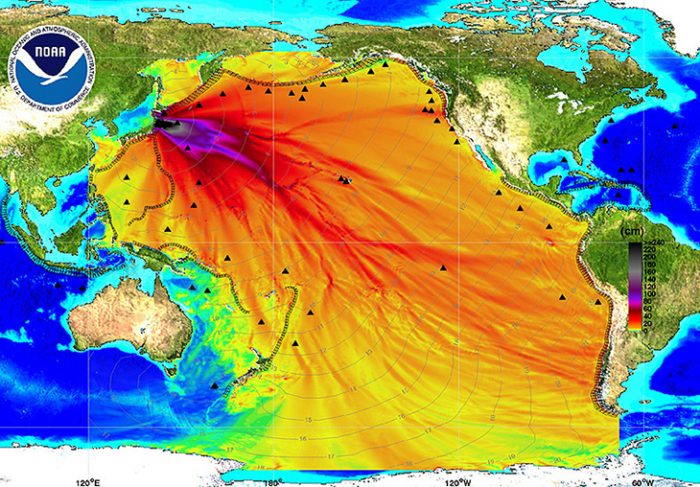
Northern Hemisphere Potentially In Great Danger - Fukushima Radiation

Northern Hemisphere Potentially In Great Danger As Fukushima Radiation Spikes To ‘Unimaginable’ Levels

Sunday, February 5, 2017

Scientist develops biodegradable, edible non-plastic bags

Scientist develops biodegradable, edible non-plastic bags 


Image: Scientist develops biodegradable, edible non-plastic bags to halt the continues plastic pollution of the world
 
(Natural News) One country that has been making a concerted effort to reduce plastic waste is India. A ban on disposable plastics is set to go into effect in the Delhi region this year, outlawing the use of produce bags, cutlery and other disposable plastics, and many cities already ban plastic bags. It is therefore not surprising that one of the more innovative approaches to the fight against plastic is coming out of India.
In fact, it was a solution to the problems posed by this type of legislation that inspired Ashwath Hegde’s novel solution. Hegde noticed that many Indians were struggling to find a new way to bring their groceries home after the ban made traditional produce bags illegal. He said that many people cannot afford a reusable bag to carry their purchases, so he wanted to find an answer that would be both affordable and sustainable.
The trick was finding a material that would mimic plastic’s strength and flexibility while still being completely biodegradable and organic. He found success by mixing vegetable oil derivatives with natural starch, tapioca, potato and banana. The raw materials are converted to a liquid and then must undergo six more steps before becoming bags that have the look and feel of plastic without any of the negative effects on the environment such bags bring. Even the paint that is used to print on the bags is organic and natural.
Hegde’s EnviGreen bags degrade naturally in just 180 days, but they will disappear in just one day if they are placed in water at room temperature; they can dissolve in boiling water in just 15 seconds. They pose no danger to plants, animals or the environment, and they contain no conventional plastics.
However, the most interesting quality these bags possess is the fact that they are completely edible. While you might not want to serve them to guests for dinner, animals that encounter them in the environment can eat them without suffering any adverse effects. A number of tests have proven their safety and biodegradability, and Hegde drove the point home by dropping one of his EnviGreen bags into boiling water and then drinking it in an interview with the press. (RELATED: Find more news about natural solutions at Natural.News)

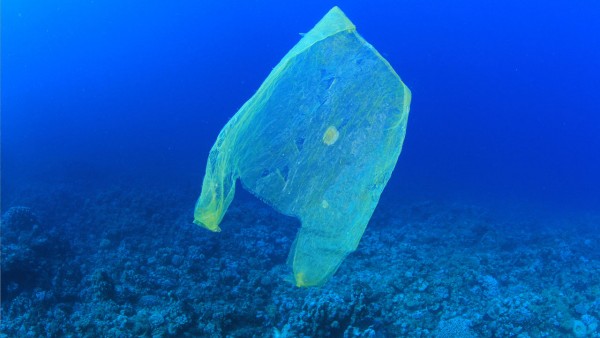
Plastic bags are polluting our oceans and killing animals

If these bags can be made and distributed on a wide scale, it could make a big difference to the ongoing problems caused by plastic bags. Many people use traditional plastic bags without giving a second thought to just how significant the damage they cause really is. (RELATED: Read more news about protecting the environment at ENVIRO.news)
It is estimated that 100,000 sea turtles and other types of marine life meet an untimely death each year as a direct result of of plastic bags, either because they are strangled by them or because they ingest them. More than 700 species are now endangered thanks to plastic waste, and nine out of 10 sea birds have plastic in their stomachs. Without safe, clean water to drink, more animals will die as pollution continues to increase.

Problem is widespread and growing

The world currently uses more than 100 billion single-use plastic bags each year, and the majority of them wind up in our oceans. It takes an incredible 100 million barrels of oil to make the plastic bags used around the world each year. Our oceans are currently home to 270 million tons of plastic, which is joined by an additional 8.8 million tons of plastic waste every year.
Hegde’s bags are already being sold in Abu Dhabi and Qatar, and they are expected to hit the Indian market this year. The plastic material is being used to make not only grocery bags but also garbage bags, packaging films and laundry bags. Mainstream adoption of safe solutions like these bags could well help our planet win the war against plastic.


Friday, February 3, 2017

M. Zuckerberg’s security goons threatening Hawaiians

Mark Zuckerberg’s Facebook security goons caught intimidating and threatening Hawaiians

(Natural News) Facebook CEO Mark Zuckerberg really ticked many Hawaiian natives off recently, when he decided to launch eight lawsuits against families who had inherited portions of his estate’s land. Under the Kuleana Act, natives are given the right to own land if one of their family members was the original purchaser. The Act, which was established as Hawaiian law in 1850, makes 14 parcels, or eight acres of Zuckerberg’s 700-acre estate, available to natives. (RELATED: Find more Facebook news at Facebook.fetch.news)
The lawsuits were launched on December 30, but the law still gives direct family members of a parcel’s original owner the right to enter Zuckerberg’s private compound. Last year, Zuckerberg had a 6-foot high wall constructed along the Koolau Road frontage portion of the property, making it tough for the original owners’ family members to access the inherited portions of Kuleana land.
The wall, erected through the use of quiet title action lawsuits filed by Zuckerberg, has many locals outraged. The lawsuits that have now been filed would compel owners of Kuleana parcels to either sell or surrender their ownership. Zuckerberg has stated that he is reconsidering the matter, however.
“Based on feedback from the local community, we are reconsidering the quiet title process and discussing how to move forward,” he said. “We want to make sure we are following a process that protects the interests of property owners, respects the traditions of native Hawaiians, and preserves the environment.”

Hawaiians march in protest

Hundreds of Hawaiians plan to protest along Zuckerberg’s six-foot wall every Saturday until the lawsuits are dropped. The protests are being organized by a local farmer named Joe Hart. Hart, who only lives a quarter mile from Zuckerberg’s property line, insists the protests will continue because natives believe that Zuckerberg’s partners will continue the lawsuits on his behalf. Protesters will be showing up for peaceful marches along the wall while blowing on conch shells and beating their drums. Hart is expecting a protest turnout of at least 200 people, and he hopes it will shed light on the issue.
“He’s made his money stealing everyone’s information, which we’ve let him do, but to come down here and start suing everyone, that’s not going to fly down here.”

Zuckerberg’s security staff won’t play nice

Zuckerberg’s neighbors aren’t too thrilled with the Facebook CEO’s security staff, who have been using intimidation tactics to keep the locals away from the public beaches and trails which cut through sections of his property. Hart grew angry when security guards confronted him while he was out for a stroll on the public beach near the property.
“We were walking along and they tried to say that this was private,” said Hart. “I’ve been walking on this since I was a little kid.”
Other locals have also reported similar negative encounters with the security staff.
Last year, Naoshi Grady called the police and filed a report after security guards escorted him off a public trail. Grady said in an interview with the Honolulu Star-Advertiser, “They told me I was on private property. They were threatening to take my picture and have me arrested. They were aggressive, rude, and disrespectful.” (RELATED: Find out what’s being hidden from you at Censored.news)
A self-professed public access activist and Kauai resident named Richard Spacer has spoken with many locals about their experiences near the estate. He determined that people were encountering no-trespassing signs along the historic Ala Loa Trail, and that security guards riding all-terrain vehicles have been forcing people away from the property.
 
Facebook CEO Mark Zuckerberg is an arrogant globalist goon. Being part of the world's elite - he thinks he can get things done his way. His Facebook is already supporting fake news media and censoring REAL ALTERNATIVE NEWS media. What a LET DOWN, TIME is BOYCOTT Facebook !!!

Nigeria: Christian lawyer receiving death threats for defending victims of Fulani attacks - Where are the Christian state leaders of the World to voice out for the BLOOD of their brethren!

  Nigeria: Christian lawyer in hiding after receiving death threats for defending victims of Fulani attacks Nigeria: Christian lawyer in hid...